There is no such place as the horizon.
It arises through the body and through images,
As a line that joins and separates the earth and the sky
It marks an uncrossable space
always ata distance, elsewhere, and unreachable.
Without the horizon, there would be no limit.
On Mars, all our horizons are images.
And images our horizons.
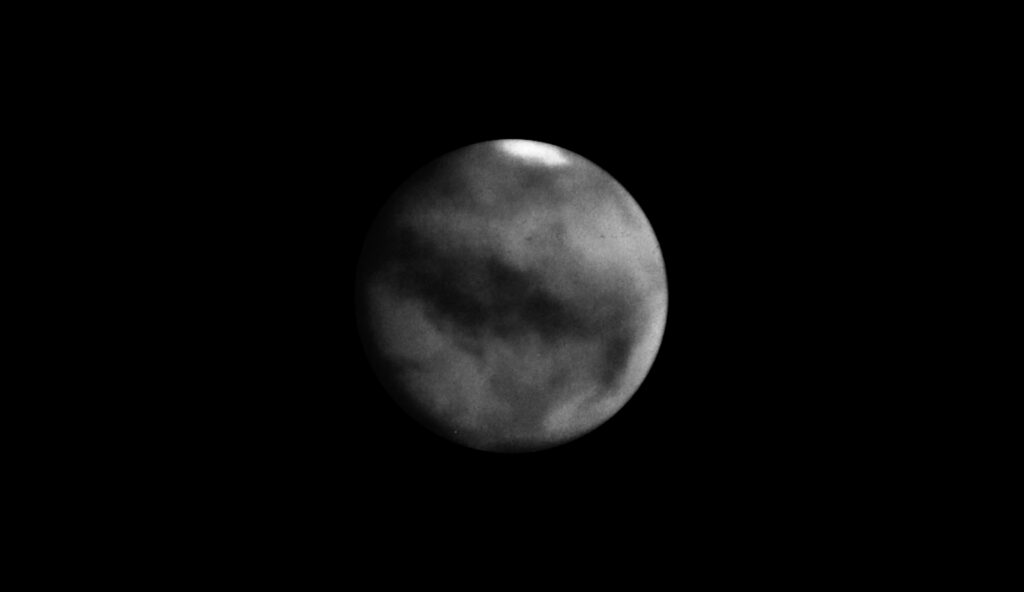
The journey to Mars starts in 1964 with Mariner 4, an American spacecraft, which makes the first successful fly-by of the planet.
an onboard TV camera takes 22 pictures storing them on a tape recorder.
NASA describes these images as close-ups though they are taken at distance of 10 thousand km from the surface of the planet. The images will take 4 days to transmit across the distance of 34 million-miles from mars to earth.
On the ground engineers grow impatient.
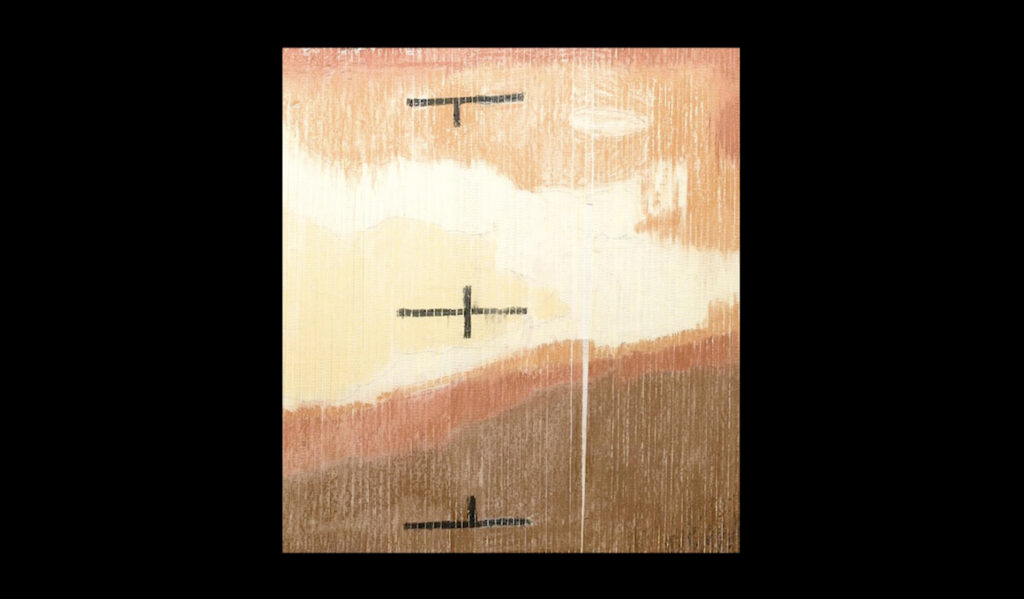
they start printing data on ticker-tape and staple it to the wall, strip by vertical strip.
They go to the local art shop, buy some coloured pastels, and begin shading, matching different colours to numbers, which correspond to the brightness of pixels.
20-25 yellow
30-35 orange
40-45 red
50-55 brown
It is drawing by numbers. an image that seeks to anticipate what is yet to come.
It is twice as long as it should be, because of the width tape.
And upside down.
The ground is at the top,
and the sky, the darkness of space, at the bottom.
It’s an inverted horizon, and what appears to be a sunrise or sunset, is a myth.
It is a fiction presented as a scientific artefact.
Four days later, the 22 black and white photographs are finally transmitted, revealing a barren dusty planet covered in craters.
But it was the pastel version, not the photographs, that was framed in wood and presented to William pickering, director of the Jet Propulsion Laboratory at NASA, and then released to the public as the first image of Mars, much to the annoyance of senior scientists.
The images fuelled a demand for further images, necessitating more missions.
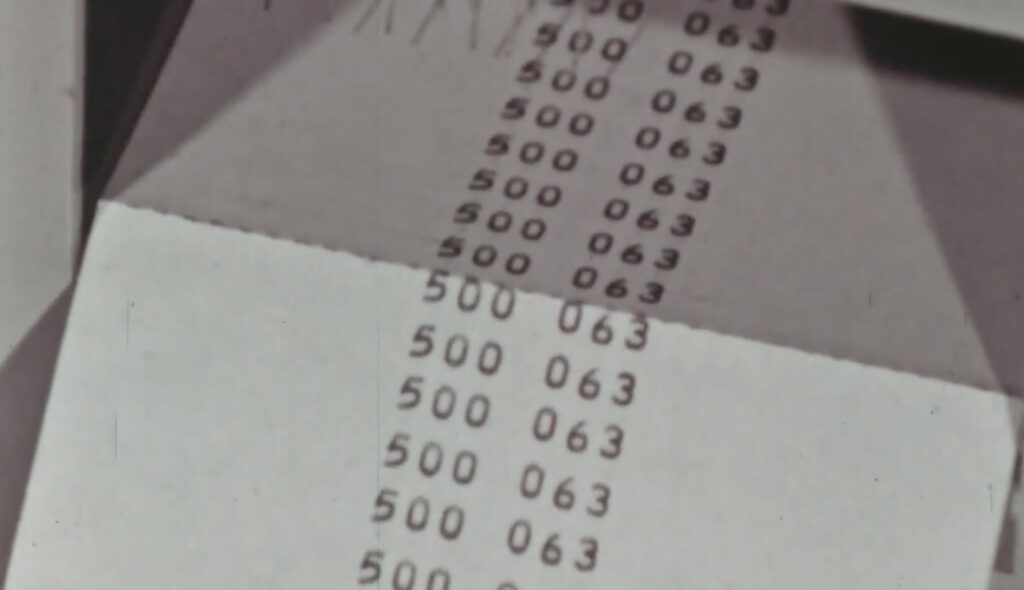
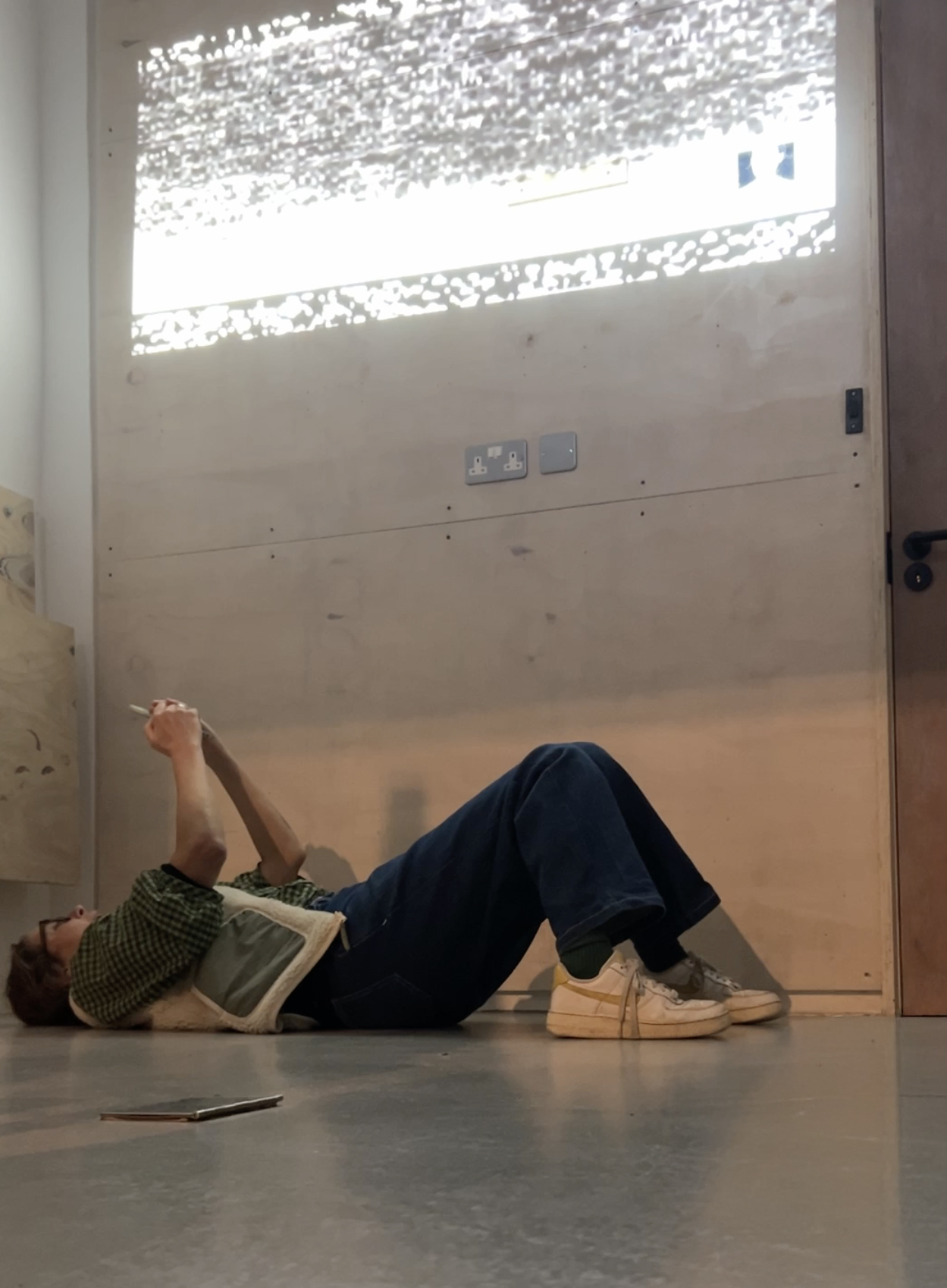
In 1971 a Russian spacecraft, Mars 3 is the first to land on the surface of mars. Soon after touchdown it begins to transmit image data but after 79 lines, the signal stops, permanently. the incomplete data is deemed valueless, so no pictures are released to the public.
But then in the 1980s, during Glasnost. an image surfaces
Russian scientists are quick to dismiss its importance.
It’s just a teleprint of a signal they say
an index of a machine, not a place.
The black areas they are not what you think, they are not vastness of space, but the denseness of the screen, gaps in the data.
But the image circulates anyway, among Western scientists and space enthusiasts, mostly in the US and Europe.
It is heavily cropped and turned by 90 degrees.
It is claimed, without evidence, that the spaceship had fallen on its side,
That the noise in the in foreground is martian rock, the glitches in the background are space dust.
And using this upended logic the band of white becomes the horizon.
The image is no longer a representation of space,
but space a representation of the image.
Soon after this, Mariner 9, an American spacecraft makes the first complete orbit of Mars, a circuit of 27,000 miles, and captures the first images of volcanoes and mountains three times the size of ours on earth. the image is cartographic, its flatness difficult to read. the horizon drawn as a line underneath, like a heartbeat, giving us the ground and its highs and lows.
In 1976 Viking 1 another US spacecraft becomes the first to transmit a complete image from the surface of mars.
There is an argument.
The head of imaging at NASA insists it should show the Viking’s foot on the ground.
This is the best evidence of our mission’s success he says,
But others disagree. Speaking out one NASA scientist says:
‘If you were an explorer transported to an unknown terrain, would you first look down at your feet?
No, you would look towards the horizon’
A photo comes shortly after, broadcast widely on TV.
a greyish terrain and a blue sky.
But it’s been white balanced for conditions on earth, and is
quickly replaced by a second photo with
with a reddish terrain and a pink sky.
In this all traces of the Viking itself are gone,
And the image has been cropped from a square to a rectangle,
and corrected for an 8% tilt to straighten the horizon.
These adjustments help remodel the image
into a more familiar and mesmorising landscape
one whose vantage point we have occupied before.
in the earliest photographs of the American west, for example,
which laid the ground for domination and expansion,
their empty scenes
encoding land as ready for settlement.
The horizon is a thread making planetary connections,
It orients and stabilises us,
Giving us, its observers, a position, and a body,
Keeping us fixed and our
frees our eyes to roam
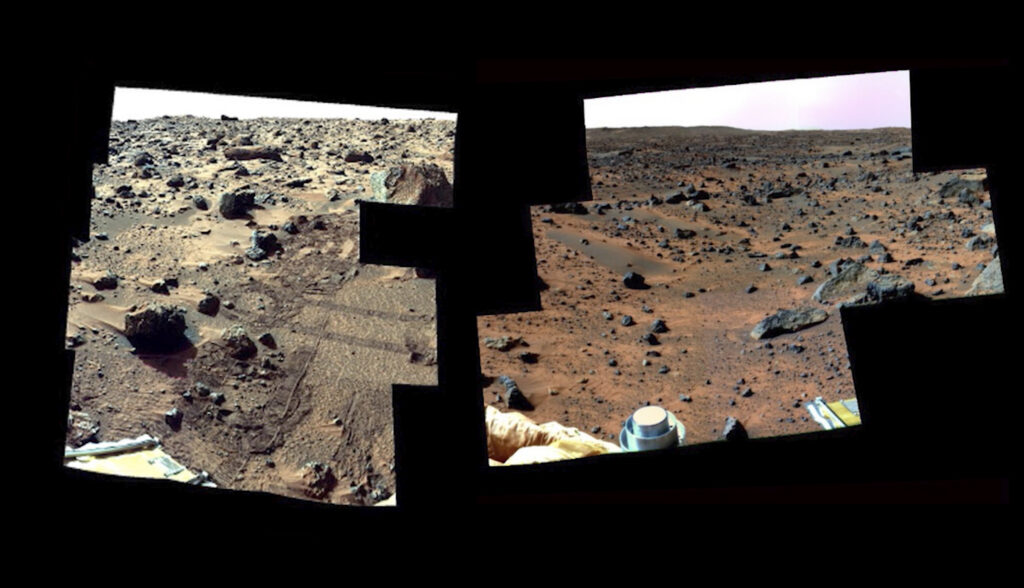
20 years later, its 1997, and the first mobile camera, also American, called Sojouner, travels 100 meters across the surface of Mars.
Its first image is a form of self-portrait looking back at itself and its deflated parachute, a document of its arrival.
But the curved horizon,
the join across the middle,
the vignetting, and the sunflare,
All effects of remote automated vision,
are seen as imperfections
in need of corrections.
And once again this first image is quickly updated.
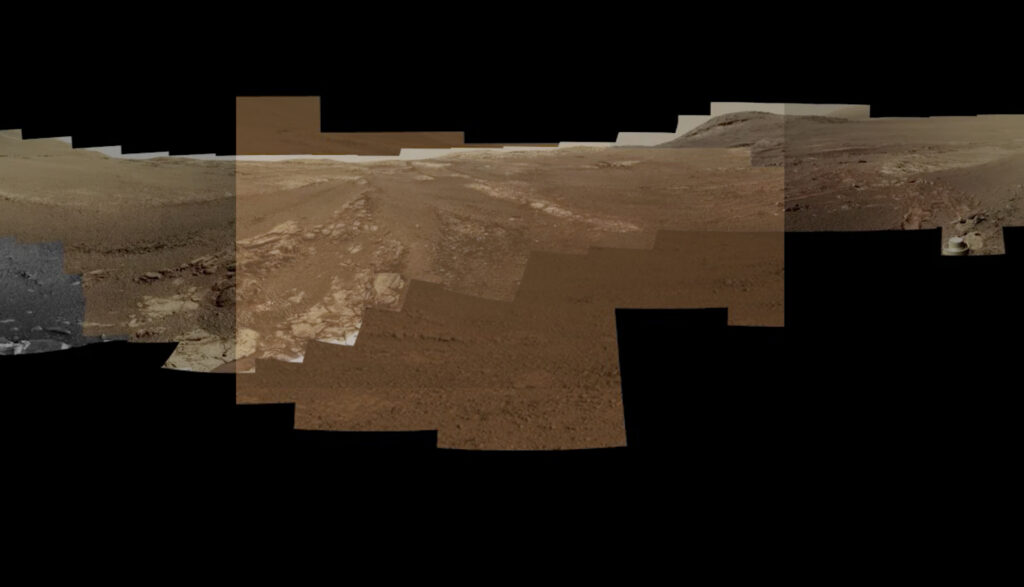
Sometime later come the mosaics,
stitched from multiple frames
to recover the navigability of the ground
re-levelling the horizon.
The background of the screen becoming a fantasy of dark matter
Even with their irregular edges and zigzag processing,
we believe in them
as a representation of a place, a window onto a remote reality.
These images are acquisitive – if we want more territory, we add more images.
As if they can control what they represent.
Curisioity,
again American,
with 17 cameras, including hazcams for obstacle avoidance, mastcams and chemcams, arrives in 2012
its first image was turned clockwise by 47 degrees, once more rescuing the horizon through its reframing,
The fine dust that coats the camera’s lens just after landing becomes part of the image,
a mark of its authenticity,
but again the headlines complain
of a wasted photo opportunity,
as if a this was taken by a fully grounded photographer, and not a machine at a distance of 34 million miles.
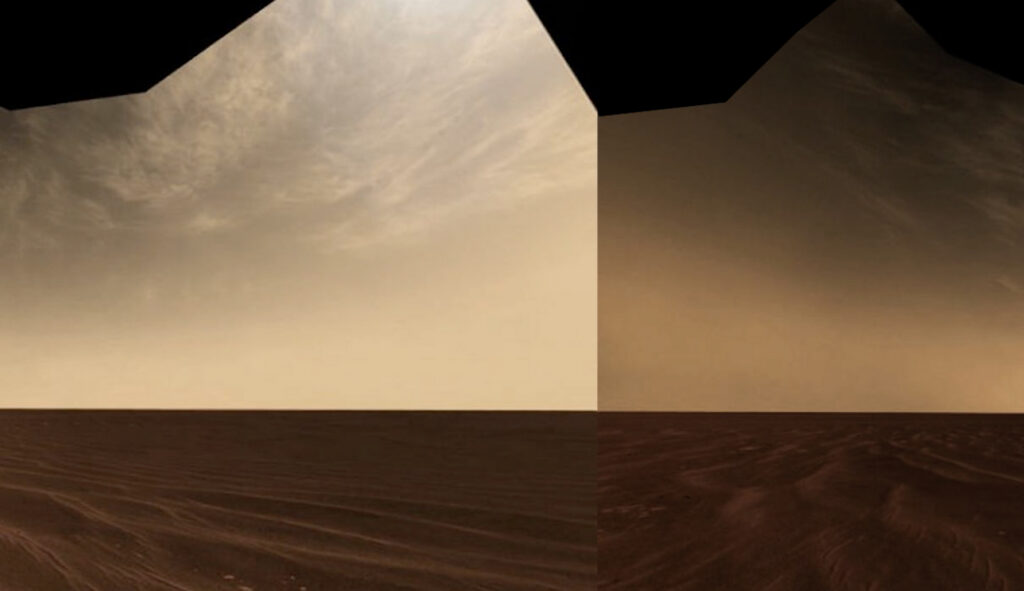
And later from Curiosity is a horizon so perfect
that we can only assume it is mathematically constructed rather than
organically straight,
pulling the sky out of shape,
laying an optical ground.
This is a scene re-arranged for us,
as if the human eye is the ground of all seeing,
the still point that is both the picture’s origin and its conclusion.
The caption tells us this is record of a measurement of twilight cloud activity, and falling ice streaks,
which is another way of saying it is real.
It wasn’t long after this that Curiosity captured a blue Martian sunset,
the most reproduced of all the planet’s images.
According to colour psychology blue is the colour of peace and happiness,
freedom and intuition,
imagination, depth, trust and loyalty,
sincerity, serenity and stability,
wisdom, confidence, faith.
integrity and intelligence,
responsibility, commitment, professionalism, knowledge and power,
separation, isolation, loneliness,
loss and depression.
blue is reportedly the favourite colour of men and conservatives, globally but especially in the UK and the US.
The distant blue of the distant horizon of a distant planet – a container and an invitation, for longings, losses and desires.
Vision is detached from other bodily senses
as if we are all that we see.
preparing the ground
making it legible, calculable and approachable.
It is as if Mars already belongs to us, and we are the universal and rightful owners of all its vantage points.
Elon musk says ‘I have my sights on Mars.’
Just this week a news report about its habitability,
its prospects for future human settlement.
Its there for our freedom, our growth, our security.
Forget the radiation, sub-zero temperatures, lack of oxygen and surface water, and the savage dust storms that engulf the whole planet for months.
None of which are visible in the pictures.
Also silent is the space race, the competition between china, Russia and America, between SpaceX, Blue Origin, virgin, rocketlab and Boeing.
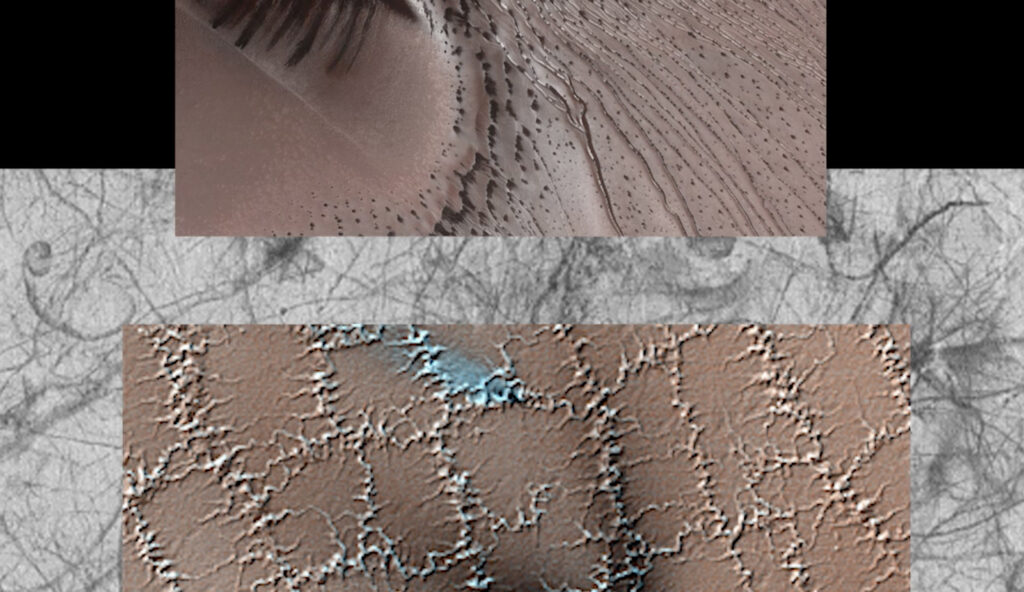
Today, 200 miles away from Mars a high-resolution camera, called HIRISE, circulates in constant orbit, s FTC ending its data to earth in 15 minutes, via the deep Space Network
One HiRISE image contain 16,666 times as much data as the Mariner images from the 1970s.
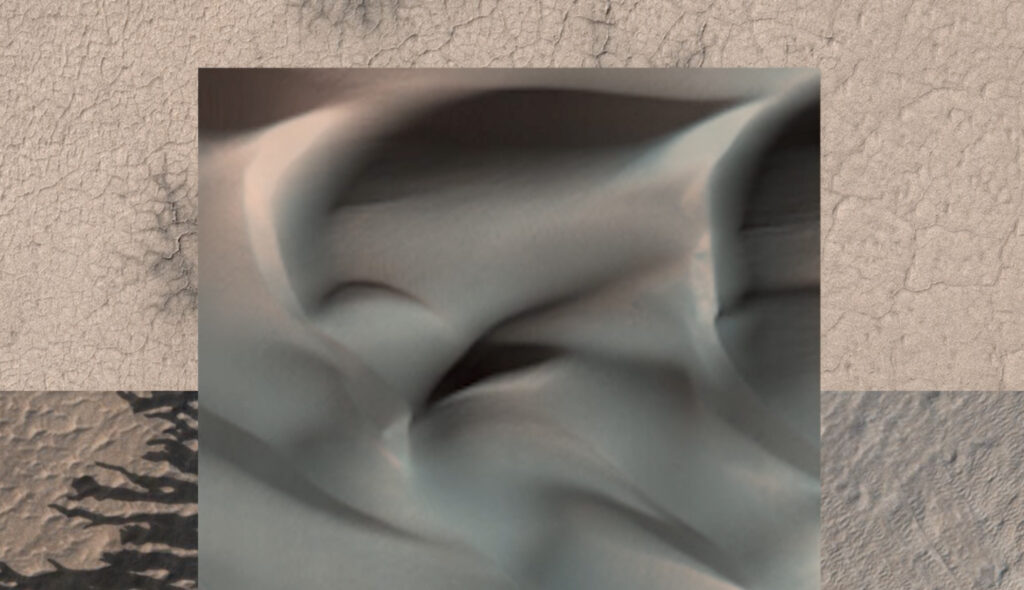
These images from above bring an end to the horizon, so that the ground on which we stood is our new field of vision. There are gullies, channels, craters, mountains and dunes, but without the horizon it is pure surface, there is no sense of scale, no centre or fixed points. we become directionless and adrift.
The unreachability of the horizon replaced with the tension of facing the ground, or falling towards it.
Fragments like body parts with hairs, sinews, blotches, scars, pimples, scratches, spots, veins, and skin, an anatomy of parts, spin out from the centre, detached from the whole.
Without the line of the horizon to connect them, they are divided from each other,
confusing subject and object, observer and observed.
The HIRISE is known as the People’s Camera. It’s a web-based click-able, zoom-able, downloade-able image bank with 100,000 photos freely available without restrictions on use.
An imaging pipeline undertakes automated processing, including stretching, binning, radiometric calibration, geometric projection, stitching, contrast augmentation, and colour interpretation.
And heavy cropping that preserves only 5 per cent of the image.
The cuts abstracting and controlling the ground through their composition.
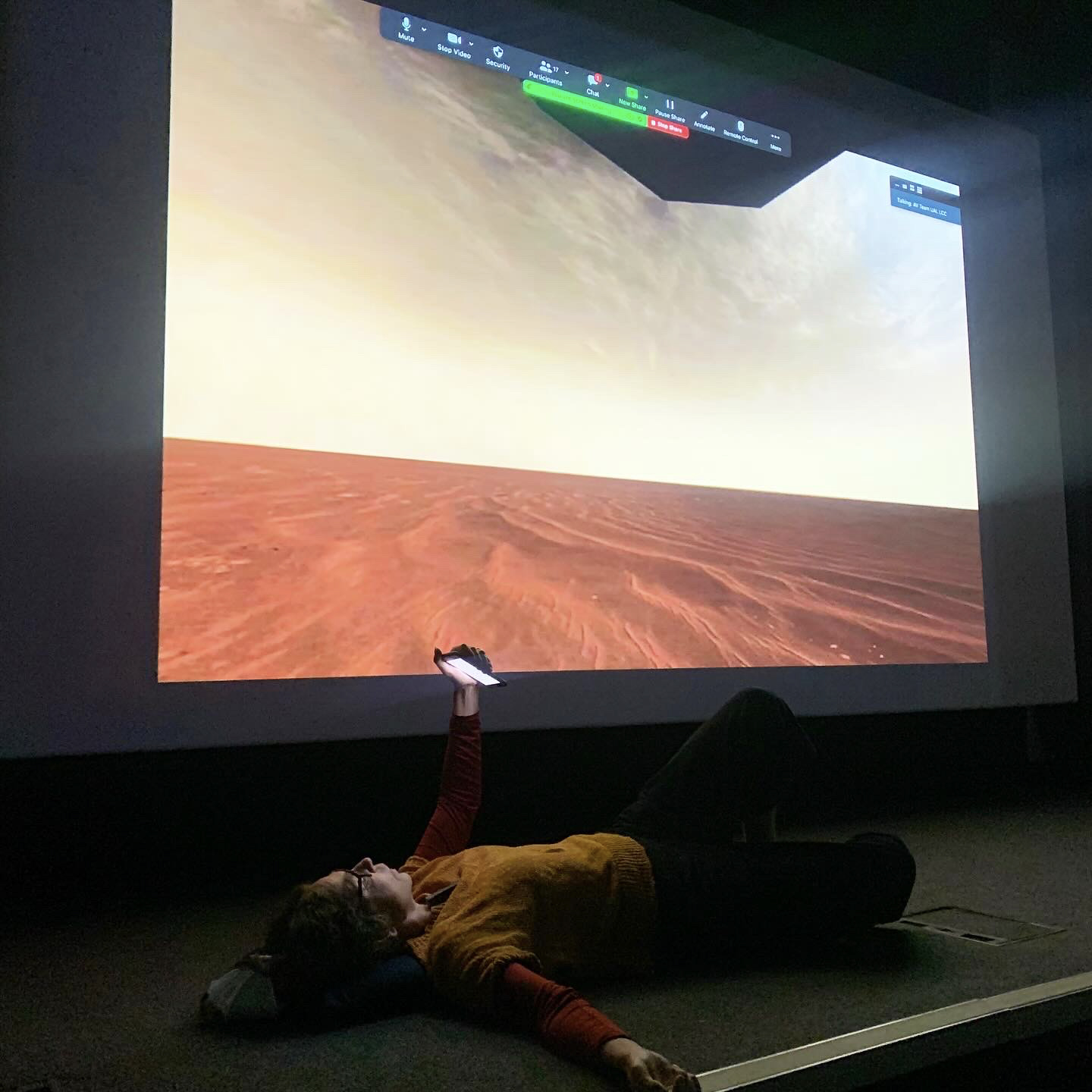
And now there is a hook up with Google so it’s easier than ever to go to Mars from our laptops.
Though part of a network of capital, land, technology and finance these images float as detached objects, without a clear source of authority. We participate in their circulation, sharing and reproducing them, creating new constellations, separating them further from their origins.
These fragments are part of a knowledge system expanding outwards into space, from me towards infinity.
The old ground, is giving way.
We are no longer outside of images looking in but orbiting with them, catching glimpses as we pass by.
But while these images might uplift us, they make it harder to keep our sights on who or what is in control.